
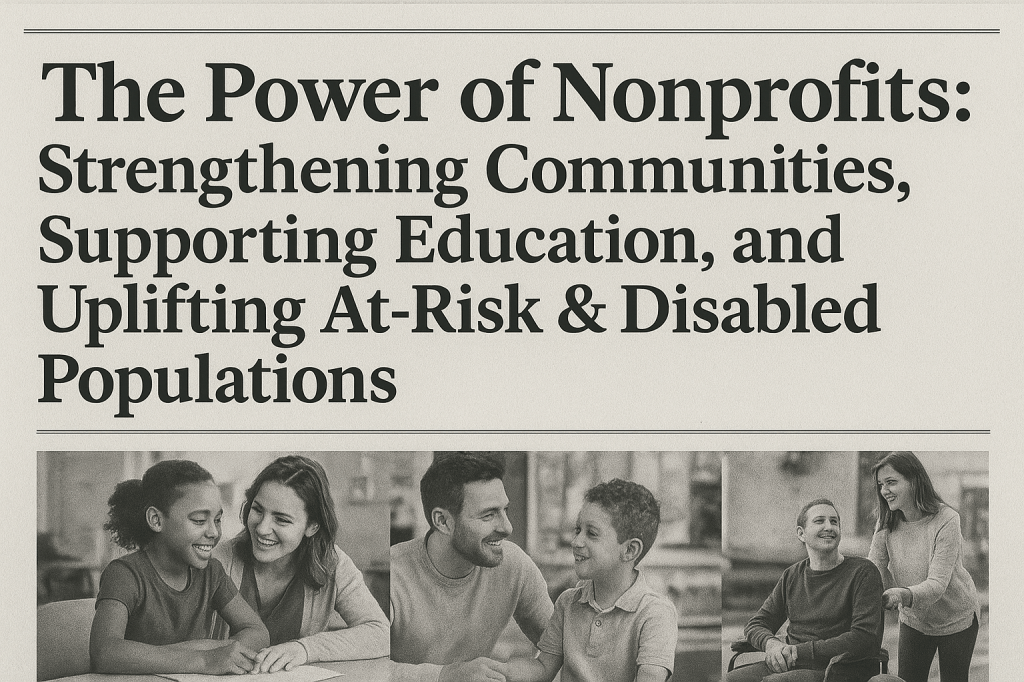
The Power of Nonprofits: Strengthening Communities, Supporting Education, and Uplifting At-Risk & Disabled Populations
Nonprofit organizations are some of the most essential — yet often under-recognized and criticized — forces driving positive change in our communities. Whether supporting students, individuals with disabilities, or families facing barriers, nonprofits step in where traditional systems may fall short. Their work strengthens the social fabric, provides access to opportunity, and ensures every person has the chance to thrive.
Why Nonprofits Matter
At their core, nonprofits exist to serve. They reinvest time, resources, and funding directly back into programs that benefit the public good. This mission-driven structure allows them to respond to community needs quickly and creatively, without being limited by profit margins or industry trends.
Because of this flexibility, nonprofits often become the first to identify gaps — and the first to take action.
Supporting Education and Lifelong Learning
In the education sector, nonprofits play a critical role supporting students, educators, and caregivers.
- Expanding Access to Arts, Literacy, and STEM
Many nonprofits offer low-cost programs in reading, theater, dance, music, science, and more. These programs spark creativity, increase confidence, and give students skills that extend far beyond the classroom.
- Bridging Opportunity Gaps
Students from underserved or at-risk backgrounds often face barriers that affect academic success. Nonprofits provide tutoring, mentorship, after-school enrichment, meals, transportation, and social-emotional development supports — ensuring no child is left behind because of circumstances outside their control.
- Supporting Schools and Educators
Community organizations frequently step in with grants, supplies, volunteers, professional training, and specialized workshops that help teachers do their best work.
A Challenging Reality: Federal Defunding
In recent years, federal cuts to education and community grants have placed increasing pressure on nonprofits to fill widening gaps. As public funding shrinks, organizations must stretch limited resources even further — making community support and philanthropic giving more crucial than ever.
Serving Individuals With Disabilities
Nonprofits are also champions for the disabled community, offering supports that promote independence, empowerment, and dignity.
- Inclusive Programming
From adaptive theater and sports to communication workshops and skill-building classes, nonprofits create accessible spaces where individuals with disabilities can express themselves, learn, and connect with others.
- Advocacy and Protection
Many nonprofits fight for disability rights, accessible public spaces, and equal opportunities in education, employment, and housing. They amplify voices that are too often overlooked.
- Support for Families and Caregivers
Families of individuals with disabilities often rely on nonprofits for guidance, respite programs, community events, and resources that make daily life more manageable.
Reaching At-Risk and Vulnerable Populations
When individuals face homelessness, food insecurity, poverty, trauma, or unstable home environments, nonprofits provide safety nets and stepping stones.
- Basic Needs and Crisis Assistance
Food pantries, shelters, mental-health hotlines, and community assistance programs offer stability during difficult times.
- Prevention and Early Intervention
Organizations serving youth at risk of dropping out, being trafficked, or entering the juvenile justice system help break cycles of harm by providing mentorship, crisis response, conflict resolution skills, and supportive adults.
- Long-Term Growth and Healing
Therapeutic arts programs, job-readiness training, and wraparound support services give individuals long-term tools to rebuild their lives.
Strengthening the Community as a Whole
When nonprofits thrive, the entire community benefits. Their presence leads to:
• Safer neighborhoods
• Healthier families
• Greater community pride and involvement
• More equitable access to education and resources
• Stronger local economies
• Increased understanding and inclusion of diverse populations
Nonprofits don’t just provide services — they create belonging.
A Call to Support Mission-Driven Work
The impact of nonprofits is immeasurable, but they rely on community involvement to continue their missions. Volunteering, donating, attending events, and sharing awareness are simple but powerful ways anyone can help.
Communities are strongest when people come together — and nonprofits make that possible every day.
Why Everyone Should Care — Especially Those With Power and Resources
Nonprofit work is not just a “community issue” or something that affects only certain families. It is a human issue. Every one of us is connected to the wellbeing of our communities, whether we feel it directly or not. Strong nonprofits create safer cities, healthier schools, more stable economies, and a social safety net that benefits all of us.
For those in positions of influence, leadership, or wealth, the responsibility — and opportunity — is even greater. Philanthropy, advocacy, and public support from people in power can transform the reach of nonprofit organizations. A single investment in community programs can change the trajectory of thousands of lives.
It is also important to remember that we are all only temporarily abled. At some point in our lives, nearly every person will face illness, disability, aging, financial struggle, or a period of vulnerability. The supports we build today — accessibility, arts programs, mental-health resources, emergency services, adaptive recreation, inclusive education — are the same systems that we or our loved ones may one day rely on.
Supporting nonprofits isn’t charity; it’s long-term community planning. It’s saying, “I want a world that is safe, accessible, and supportive — not only for others today, but for myself and my family tomorrow.”
When people with resources invest in nonprofits, they aren’t just giving back; they are giving forward, ensuring that our entire community, present and future, has the structures needed to thrive.
